Boat Ramps Nearby
Required boat safety equipment (USCG checklist)
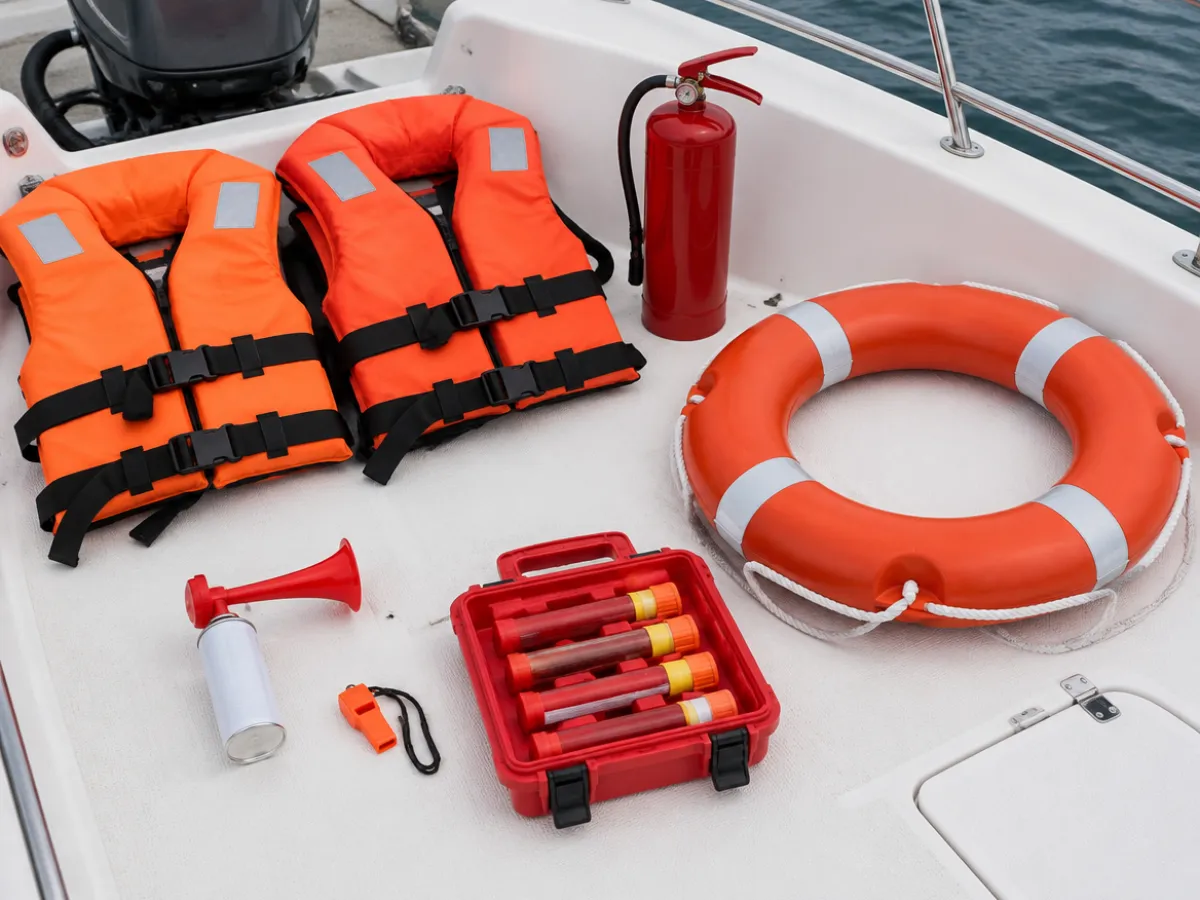
Every recreational boat in the US needs a Coast Guard approved, properly fitting life jacket for each person aboard. Boats 16 feet and longer also need a throwable flotation device, many boats need one or more fire extinguishers, and all boats need a sound signal such as a whistle or horn. On coastal waters and the Great Lakes you also need visual distress signals, and at night every boat needs navigation lights. These are the federal minimums; your state can add more.
The list below follows the U.S. Coast Guard's own pages and its brochure on federal requirements, linked at the end. It's a summary, not legal advice.
Life jackets
- One wearable, Coast Guard approved life jacket per person, in good condition and the right size.
- Readily accessible: not in plastic bags, locked compartments or buried under gear.
- A throwable device (cushion or ring buoy) on boats 16 feet and longer. Canoes and kayaks are exempt.
- Under the federal rule, children under 13 must wear their life jacket while the boat is underway, unless they are below deck or in an enclosed cabin. States may set a different age.
Older life jackets labeled Type I to V stay legal for their useful life, even though new labels no longer use those type codes.
Life jackets for the crew
-
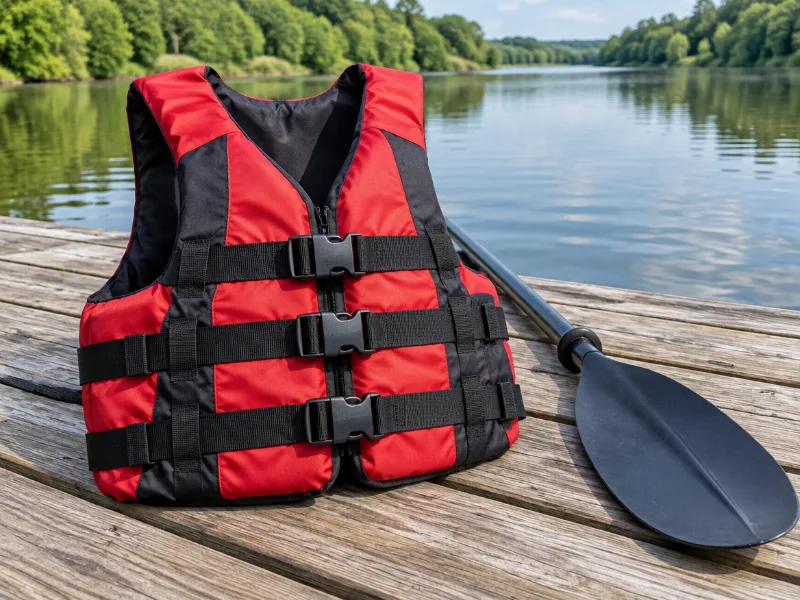 Illustration Stearns adult life vest, USCG approved Type III Federal rules require a wearable life jacket for every person on a kayak, canoe or boat. View on Amazon
 -
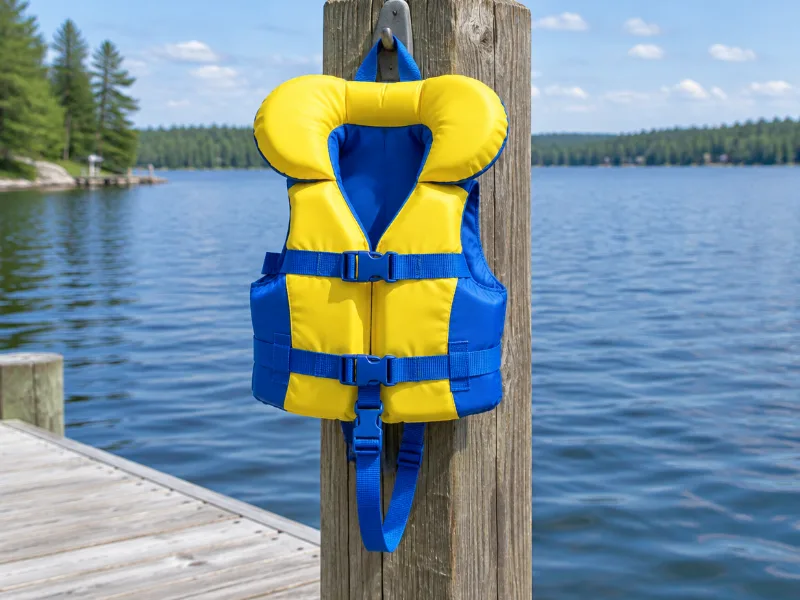 Illustration For kids Stearns child life jacket, USCG approved Type II with head support Most states require kids to wear a life jacket on board, and the head support keeps their face up. View on Amazon
We haven't tested these ourselves; we chose them by size and specs. As an Amazon Associate we earn from qualifying purchases, at no extra cost to you. Check the current price on Amazon.
Fire extinguishers
You need a fire extinguisher if your boat has a permanently installed fuel tank or closed spaces where fumes can collect, such as closed storage under seats or a cabin. Boats under 26 feet with an outboard motor, a portable tank and no such spaces are exempt. New rules took effect on April 20, 2022; they changed which extinguishers count, not whether you need one.
| Boat length | Without a fixed system in the engine space | With a fixed system |
|---|---|---|
| Under 26 ft | 1 | 0 |
| 26 to under 40 ft | 2 | 1 |
| 40 to 65 ft | 3 | 2 |
- Counts are for 5-B extinguishers. One 20-B can replace two 5-B.
- Boats from model year 2018 and newer need date-stamped 5-B or 20-B extinguishers. Older B-I and B-II labels no longer count on those boats.
- Boats from 1953 to 2017 may still carry B-I or B-II units if they're in good working condition.
- Disposable extinguishers are out of service 12 years after the manufacture date, which is stamped on the bottom or near the label. Rechargeable ones need yearly service instead.
Visual distress signals
On coastal waters, the Great Lakes and connected waters, boats need Coast Guard approved visual distress signals. For pyrotechnics that means at least three for day and three for night, or three combination day and night signals, and expired flares don't count. Boats under 16 feet, paddle craft and some small open sailboats only need night signals when out between sunset and sunrise. On inland lakes and rivers the federal rule doesn't apply, but check your state.
Sound signals
Boats under 39.4 feet (12 meters), including personal watercraft, need some way to make an efficient sound signal: a whistle, a handheld air horn or a built-in horn. Shouting doesn't count. Larger boats need a horn audible for half a mile, and on inland waters also a bell.
Navigation lights
Boats must show navigation lights from sunset to sunrise and in poor visibility such as fog or heavy rain. Small power boats can use a simplified setup of combined red and green sidelights plus an all-round white light. A sailboat running its engine counts as a power boat, and an anchored boat at night shows an all-round white anchor light.
Ventilation and flame arrestors (gas engines)
Compartments with a permanently installed gasoline engine need ventilation ducts, and those with a gas engine and a starter motor need a powered exhaust blower. Gasoline inboard engines also need an approved backfire flame arrestor; outboards are exempt.
Registration
Motorized boats that aren't federally documented must be registered in the state where they're mostly used. Keep the certificate aboard, show the number on both sides of the bow in block letters at least three inches high, and place the state sticker near it. Rules for kayaks and canoes differ by state; see our kayak launch guide.
Get a free Vessel Safety Check
Coast Guard Auxiliary volunteers check your boat for free, usually in 15 to 30 minutes, at your boat or home. There's no ticket if something is missing, just a written list. If you pass, you get a decal for the year. You can request an examiner on the Auxiliary's website.
Heading out? Read how to launch a boat and check the rules in our boater education guide.