Boat Ramps Nearby
Boating license and boater education by state
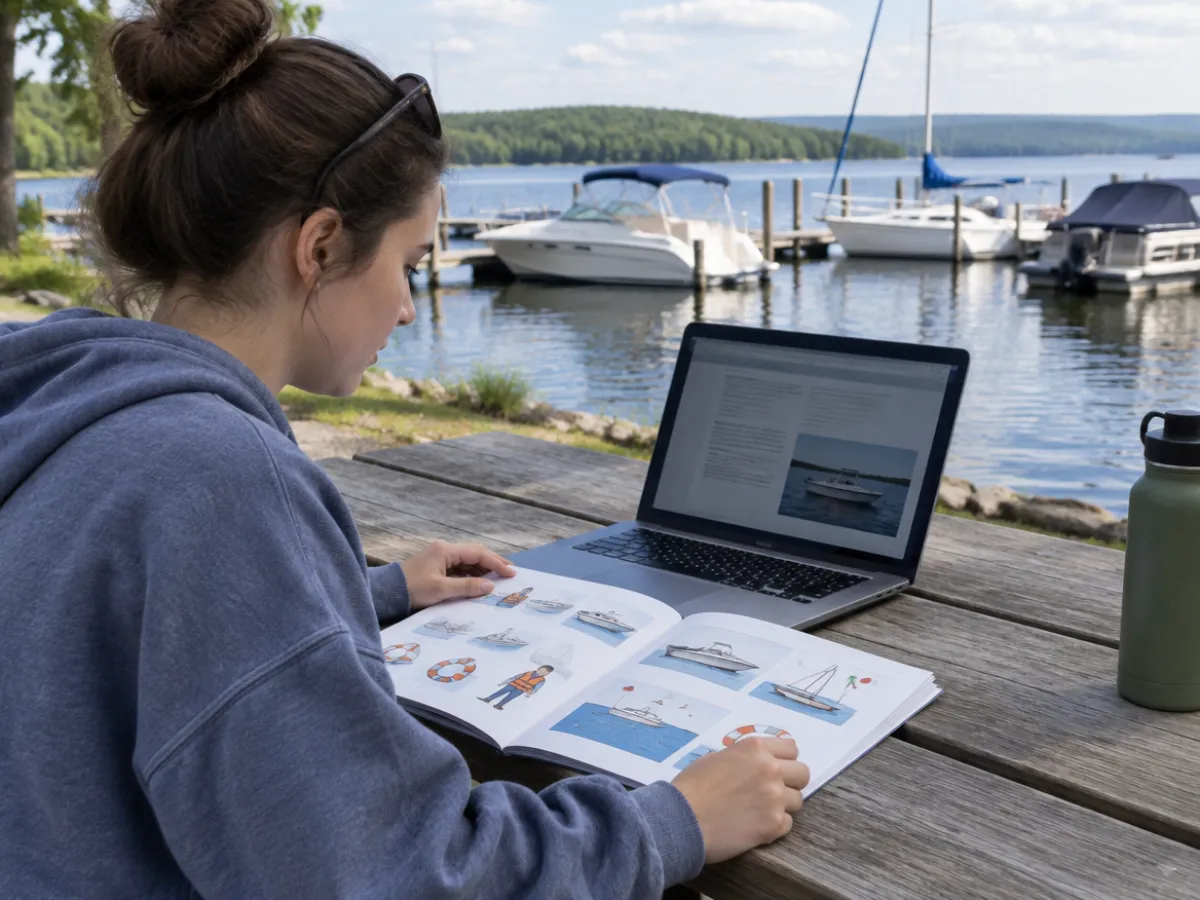
There is no national boating license in the US. Instead, most states require boat operators to carry a boater education card, which you earn by passing a NASBLA-approved boating safety course, often online. Who needs one depends on the state and usually on your birth year, your age, the engine's horsepower or the type of boat. Cards from approved courses are accepted in most other states, and many never expire.
The state examples below come from each state's official boating agency, checked in October 2026. Rules change, so confirm with your state before you go out.
What a boater education card is
A boater education card proves that you passed a boating safety course. Courses approved by NASBLA, the National Association of State Boating Law Administrators, follow a national standard covering navigation rules, required equipment, emergencies and state laws. Most states call it a card or certificate rather than a license, because you don't have to renew it like a driver's license.
State examples
| State | Who needs it |
|---|---|
| Florida | Anyone born on or after January 1, 1988 who operates a motorboat of 10 hp or more. The card is valid for life. Visitors with a NASBLA-approved card from home are covered. |
| Texas | Anyone born on or after September 1, 1993 who operates a boat over 15 hp, a personal watercraft or a sailboat over 14 feet. Minimum age 13 with a course; younger only with an adult supervisor. |
| California | Everyone operating a motorized boat since January 1, 2025, after a phase-in by age. The California Boater Card is valid for life. Visitors boating less than 60 days are exempt if they meet their home state's rules. |
| New York | Since January 1, 2025, every operator of a motorized boat needs a boating safety certificate, regardless of age (Brianna's Law). |
| Washington | Operators of boats with 15 hp or more born after January 1, 1955. The card is valid for life; visitors staying under 60 days don't need one. |
| Alabama | Residents need a vessel operator license. No one under 12 may operate a motorized vessel, and since October 2024 visitors need their home state's certification or an Alabama nonresident certification. |
Visiting another state
Most states accept boater education cards from NASBLA-approved courses issued elsewhere, and several give visitors a grace period, such as 60 days in California and Washington. Still, the rules of the state you're boating in apply, including age limits that may differ from home.
Renting a boat
Rentals are often handled differently. California exempts people renting a boat, Florida offers a temporary certificate, and Washington has a temporary card for renters. Ask the rental company what applies before you book.
Age limits
Each state sets its own minimum ages for operating boats and personal watercraft. In Texas you need to be at least 13 and have taken the course to operate a boat over 15 hp or a personal watercraft alone. In Alabama, 12 and 13-year-olds may only operate with a licensed adult aboard. In California, no one under 16 may operate a boat with more than 15 hp unless an adult is aboard.
How to get your card
- Find your state's boating agency and its list of approved courses.
- Take a NASBLA-approved course, online or in a classroom. Online courses take a few hours.
- Pass the exam and pay any state fee.
- Carry the card, or the temporary certificate, whenever you operate the boat.
While you're preparing: the required safety equipment and launching a boat are covered in our other guides.
Sources
- NASBLA: Course approval
- U.S. Coast Guard: State boating education reciprocity
- Florida FWC: Boating safety education FAQ
- Texas Parks and Wildlife: Boater education requirements
- California Division of Boating and Waterways: Boater Card FAQ
- New York State Parks: Boating safety certificate
- Washington State Parks: Boater Education Card
- Alabama Law Enforcement Agency: Boating education